
Daily Vitamins
Vitamin D and Magnesium: A Journal of the Daily Supplement Routine
Marcus Webb
·
·
9 min read
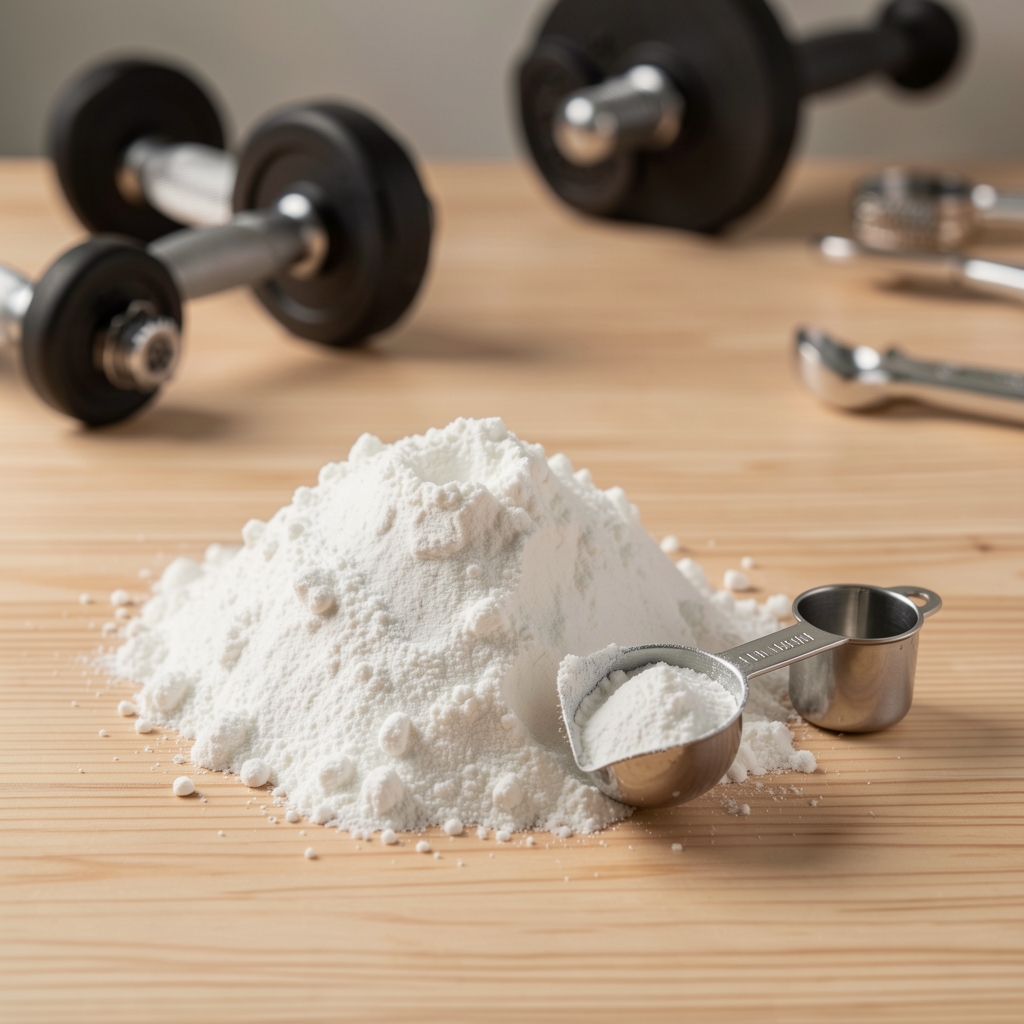
Creatine is, by some measures, the most extensively researched supplement in the category of active men's nutritional support. The published literature on creatine and physical output spans several decades, and the editorial challenge in writing about it is not scarcity of material but clarity of framing. This review does not position creatine as a shortcut or a transformation tool. It is an editorial account of how active men approach creatine as a component of a settled daily supplement routine — and what the available published research observes about its role in sustained physical output over time.
The body of published nutritional research on creatine monohydrate is extensive and, for a supplement category, notably consistent. Peer-reviewed studies over several decades observe that creatine supports physical output over time in resistance training routines. The mechanism described in the research involves the phosphocreatine energy system — a pathway active during high-intensity, short-duration physical effort. The editorial observation is that this is a narrow but well-documented role, not a sweeping claim.
What the research does not claim is equally important from an editorial standpoint. Creatine is not observed to alter body composition independently of consistent physical training. The published literature consistently notes that its effects are seen in the context of regular resistance activity, not as a standalone supplement addition. Men who have documented their creatine habits in supplement journals broadly confirm this framing: creatine's presence in the stack is linked to training frequency, not to a hope for change absent from consistent physical effort.
Creatine monohydrate remains the most studied form and the one most frequently cited in published nutritional literature. Other forms — creatine hydrochloride, creatine ethyl ester — appear in the supplement market with various claims, but the editorial position of this journal is straightforward: the published research base supports monohydrate specifically, and the habit documentation reviewed for this article skews heavily toward monohydrate as the form of choice.
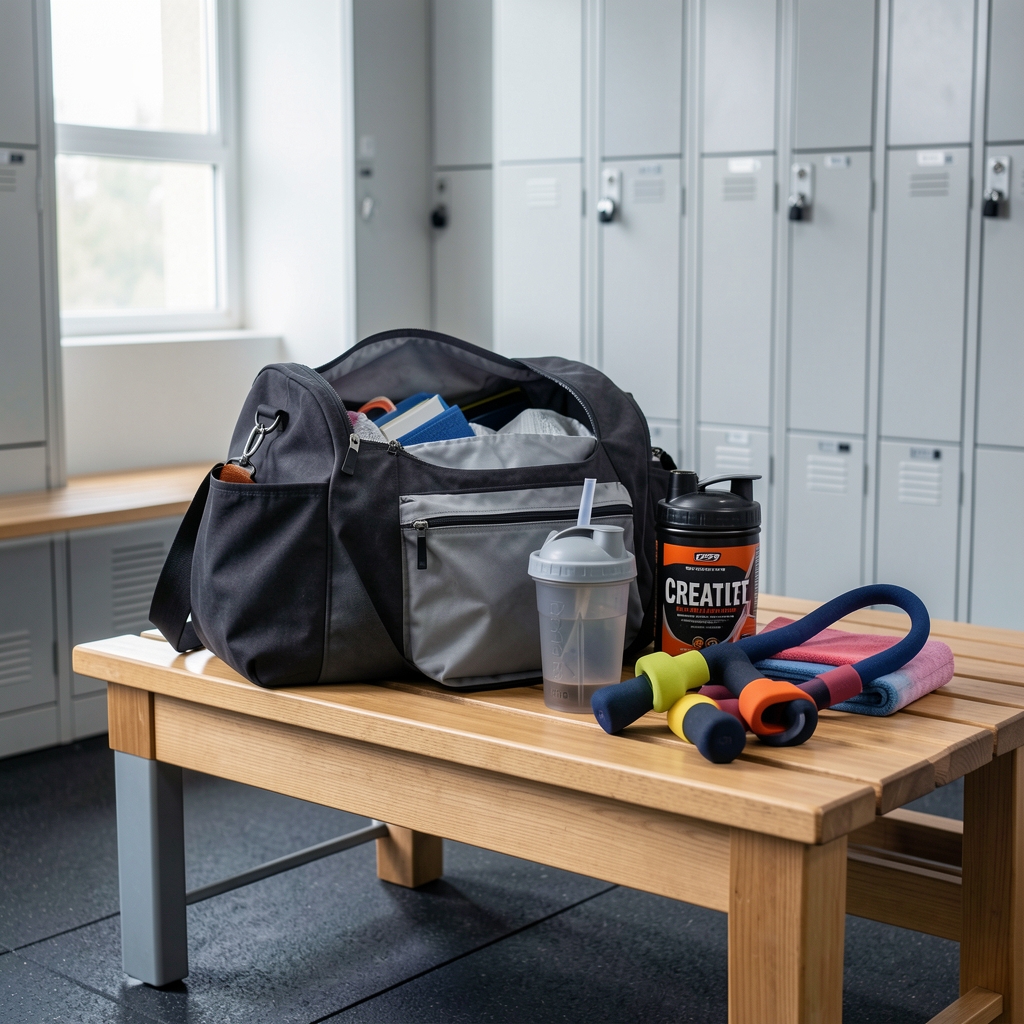
Supplement and training preparation — Jakarta, February 2026
The question of when to take creatine occupies a notable amount of space in men's supplement journalling. The published literature observes that timing relative to training may matter at the margins, but the more consistent editorial observation is that daily consistency — taking creatine at a reliable, habitual time — matters more than precise timing. This aligns with the broader pattern documented in men's supplement journals: regularity is the foundation of a functional daily stack.
The loading phase — an initial period of higher daily amounts used to saturate muscle creatine stores — appears in roughly half the supplement journals reviewed for this article. The other half document a steady lower daily amount from the outset, a pattern supported by published research showing that both approaches arrive at similar creatine saturation over time, with the loading phase simply accelerating the process. The editorial observation is that the loading protocol is a matter of preference and impatience, not of effectiveness.
Men who have maintained creatine habits over six or more months describe a qualitative shift in how they experience resistance training. The language in the journals tends to avoid dramatic claims — no contributor reviewed for this article used language suggesting rapid or consistent outcomes. The pattern is more modest: a sense of sustained capacity over longer training sessions, a slightly reduced recovery period awareness between sets. These are observational accounts, not controlled measurements, and they are presented here in that spirit.
"Regularity is the foundation of a functional daily stack. The timing debate obscures the simpler truth: consistency compounds over months, not days."
Adrian Lim — Erovan Journal, February 2026
Creatine rarely appears alone in the documented supplement stacks of active men. Its most common companion is protein — either whole food protein sources or a supplemental protein addition. The editorial logic is straightforward: creatine supports physical output in resistance contexts, while adequate protein intake is the nutritional raw material for the recovery and adaptation that follows. The two occupy complementary positions in the daily routine, and their co-presence in men's supplement journals is consistent across the reviewed accounts.
Published nutritional research on protein and daily performance is, if anything, even more extensive than the literature on creatine. The editorial observation here is not to rehearse that literature but to note its relationship to the creatine habit. Men who regard creatine as a considered addition to their daily routine tend also to regard protein — from whole foods first, supplemental protein second — as a deliberate nutritional priority. The two habits belong to the same underlying nutritional approach: evidence-informed, consistent, and grounded in the daily specifics of physical activity.
The water intake observation also appears repeatedly in the reviewed journals. Creatine draws water into muscle tissue as part of its function, and men who document their stacks consistently note an increased awareness of daily hydration in parallel with their creatine habit. This is not a formal part of the published research on creatine, but it is a consistent pattern in the observational record — and it points to the broader attentiveness that tends to accompany a considered supplement routine.
Gym nutrition for men involves a set of nutritional decisions that extend well beyond supplement selection. Pre-training food timing, intra-session hydration, post-training protein intake, and sleep nutrition all factor into the full picture of what supports consistent physical output. Creatine sits within that picture as one element — present, documented, and supported by a strong published research base, but not a substitute for the broader nutritional and lifestyle habits that underpin physical performance.
The men whose supplement habits informed this editorial review approach creatine in that spirit. It is a considered addition to an already thoughtful nutritional practice, not an entry point or a quick fix. Several contributors noted that they had delayed introducing creatine until their overall nutritional habits were settled — a sequencing that reflects the whole-food-first principle that runs through Erovan Journal's editorial approach.
The supplement stacking habits of active men in 2026 reflect a more considered nutritional landscape than was common a decade prior. The reviewed journals show men building stacks around a core of well-researched nutrients — vitamin D, magnesium, omega-3, creatine, protein — rather than accumulating supplements on the basis of marketing exposure alone. Creatine's presence in these stacks is earned: it carries the strongest published research base in the category, and it occupies a defined and limited role in the daily routine.
The editorial conclusion of this review is not that creatine is essential for every active man. It is that, for men who engage in regular resistance training, the published nutritional literature and the documented supplementation habits of active practitioners both suggest that creatine monohydrate is a well-documented, evidence-informed addition to a settled daily supplement routine. The habit is worth examining; the published basis for it is solid.

Adrian Lim is the second editor at Erovan Journal, specialising in active lifestyle nutrition documentation. He has contributed editorial reviews and observational pieces on men's supplement habits since the journal's founding.
Related: Vitamin D and Magnesium — A Daily Supplement Journal →